Linked Knowledge Graphs from Colonial and Indian Office Lists, 1867–1947
Jim Clifford University of Saskatchewan
jimclifford.ca/col_matching
The base
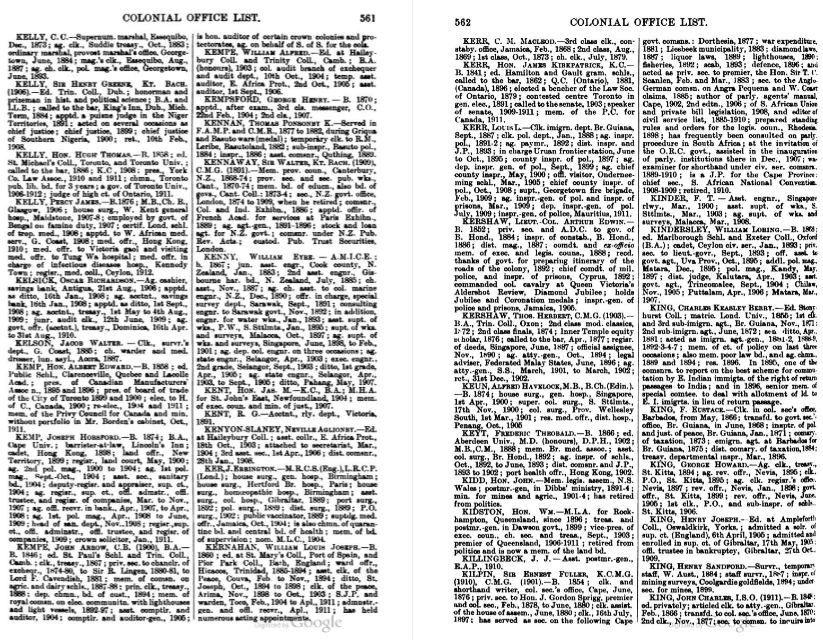
Thousands of pages like this
The Colonial Office List for 1913, pp. 561–562. Scan digitised by Google, from the Internet Archive.
Two facing pages, about forty compressed lives.
85 volumes read, 1867 to 1966, with the India Office List alongside.
The same official returns in edition after edition, so one person may be printed forty times.
The base
From pages to ground others can build on
The Lists give the terrain: places as they were, the people who ran them, and the years. Other sources are built on top.
Counts are rounded, from the October 2026 build.
The base
One colony’s printed record is twenty times the Lists
Nearly a million pages for Ceylon alone. Beside them: 32,000 issues of the London Gazette and 371 volumes of Canada’s Sessional Papers.
The base
In the biographies, most of Ceylon’s officials stayed
About 1,100 officials in the Lists’ biographies held a post in Ceylon. Seven in ten never served in another colony.
The base
The same careers at two scales
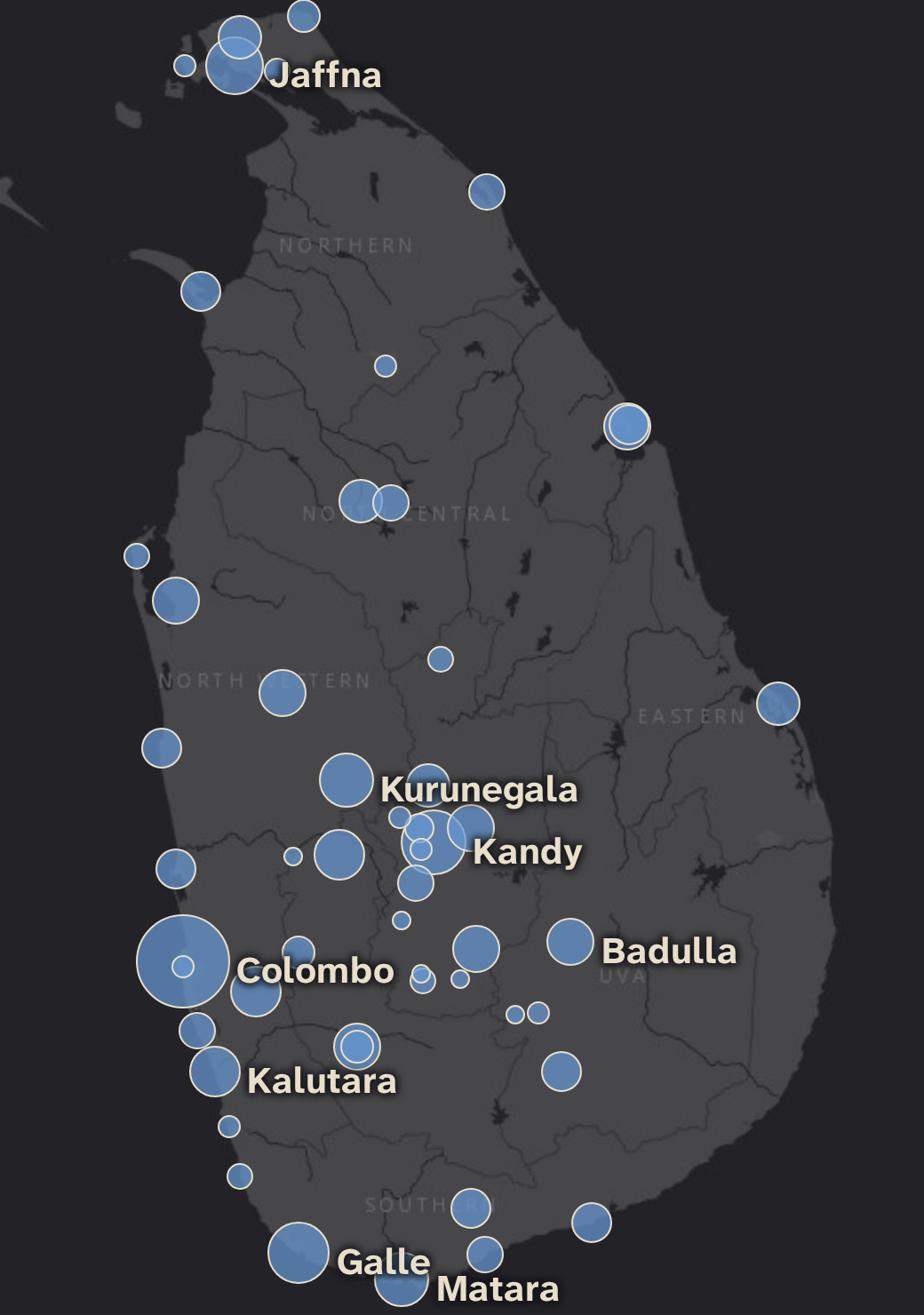
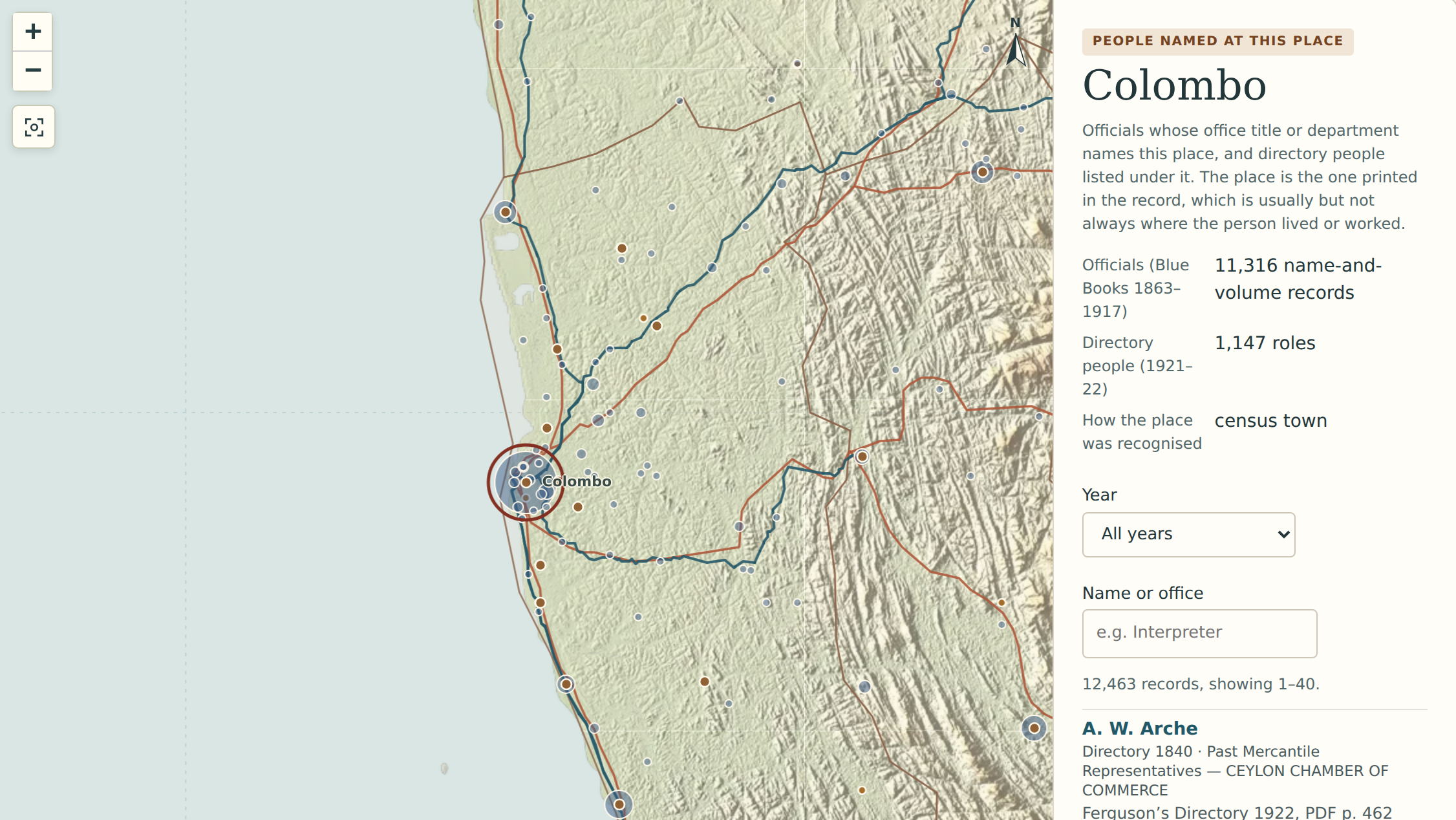
Inside the island: 54 places, read from about 220 printed spellings.
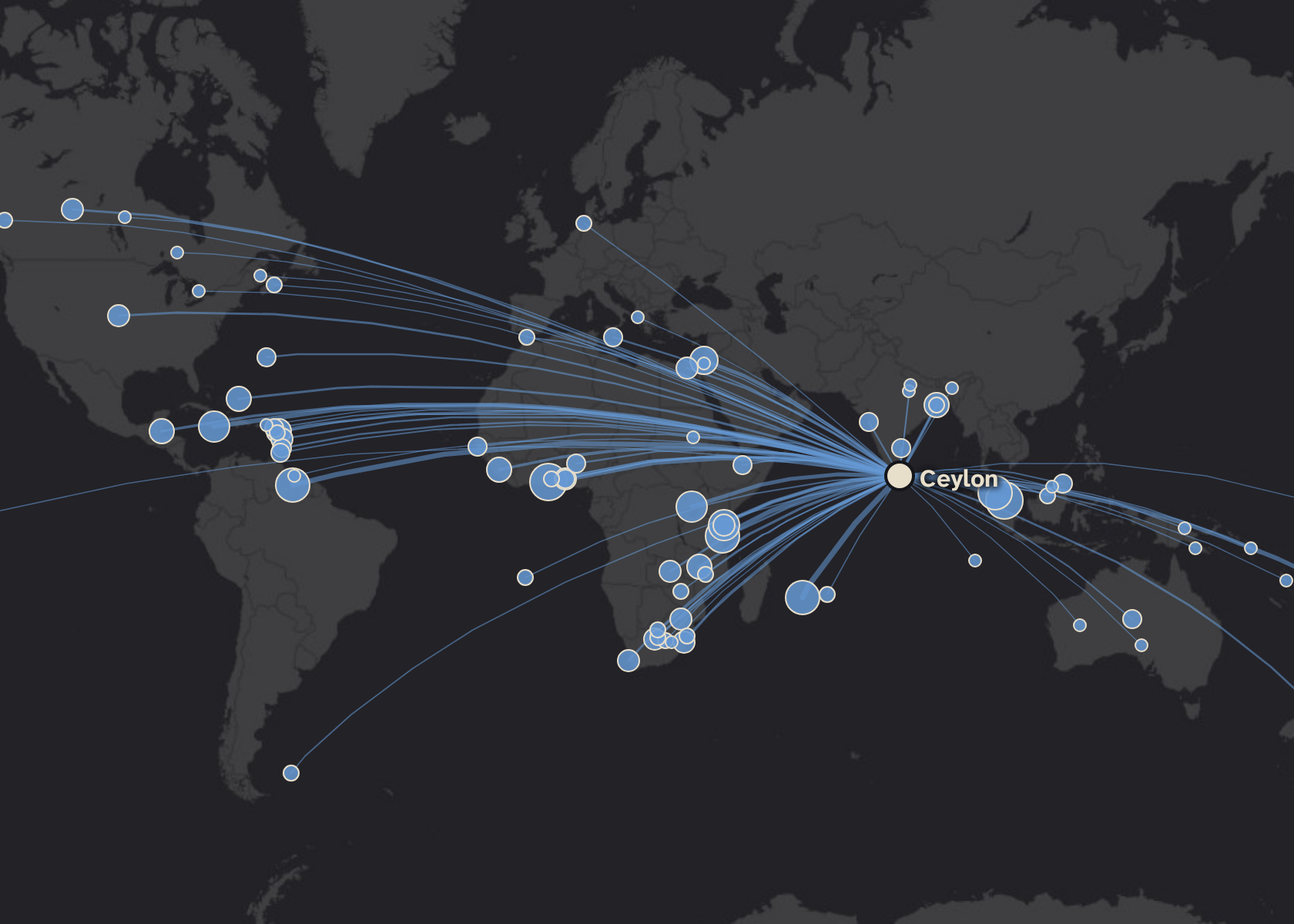
Beyond it: about 110 other colonies and territories.
The base
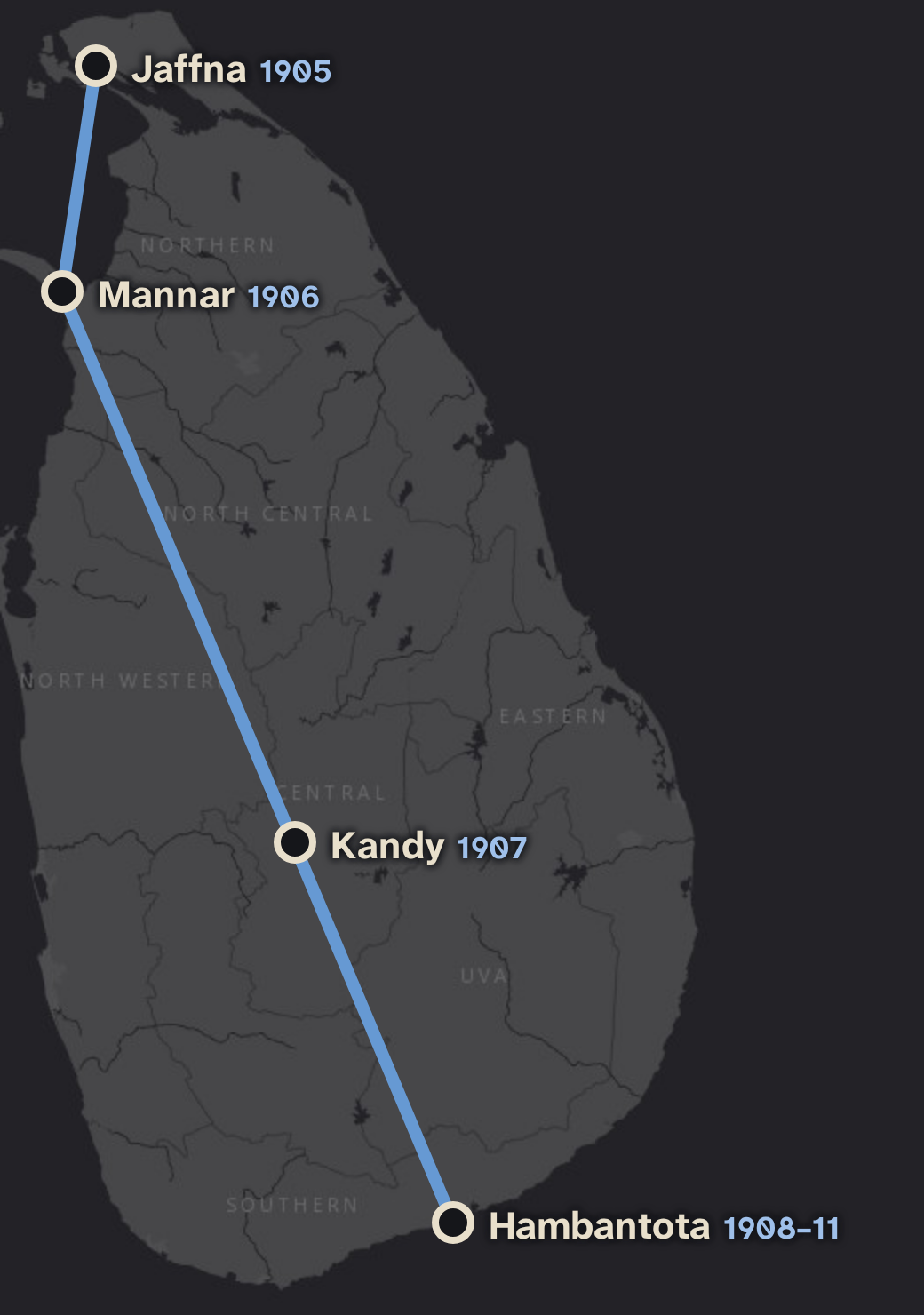
Leonard Woolf: a career inside the island
The List places him at four stations in seven years. His Wikidata identifier leads on from the career to the novel.
The base
The biographies are the tip of the colonial state
The Blue Books name about 1,300 officials in 1863 and about 9,400 in 1917. These are the people now being added to the Ceylon graph.
The base
Ceylon and India: two services, few crossings
About thirty officials in each List served in both. Nearly all were at the top, or lent for a task.
The base
A base world for others to build on
Like the base world in Minecraft: the terrain is shared, and anyone can build on it.
The base
Wikidata gives every builder the same coordinates
Five sources name the same colony. One identifier lets them meet at the same station.
The base
Use the place as it was, and mint it if it is missing
Britannica’s Ceylon was linked to the modern state, so it never met the Lists. The rule for the base: the place of the period, and a new Wikidata entry where none exists.
The question
How did each part of the British world get past the ecological limits it could not meet at home?
Quinine
Quinine: from Ceylon’s hills to Canada
Blue Booksbark exported, by destination
British trade tablesbark landed from Ceylon
The Tropical AgriculturistHowards & Sons, “principal buyer”
Canadian trade tablesquinine imported; a purchase of “Howard’s quinine” in 1899
No single source records this line. It appears when four of them are joined.
Quinine
Ceylon flooded London with bark
By 1885 nearly all of London’s bark came from Ceylon. Then the price collapsed and the planters turned to tea.
Quinine
And quinine became cheap in Canada
Canada took nine times as much quinine in 1890 as in 1880, for about the same money.
Rubber and rice
One colony, three geographies
Tea stayed imperial. Rubber went to America, and reached Canada from there. Coconut went to the Continent.
Rubber and rice
Ghost acres of ghost acres
Rice was a quarter to a third of everything Ceylon imported. Its rubber land grew by half a million acres; its own rice land did not.
People and plants
Two botanists in The Tropical Agriculturist
Beyond the trade statistics: about 1,250 articles are a source for ecological imperialism and the people involved in it.
Going forward
Building the Ceylonese side of the graph
About 1,900 people read from 26 pages of Ferguson’s Directory, 1920–21. Four in five of the Ceylonese were new to the graph.
Going forward
The graph and the text mining build each other
Every source read adds to the graph, and every addition makes the next source easier to read.
Going forward
Two days of text mining, drawn as a graph
Going forward
Each source adds people and institutions to the base